
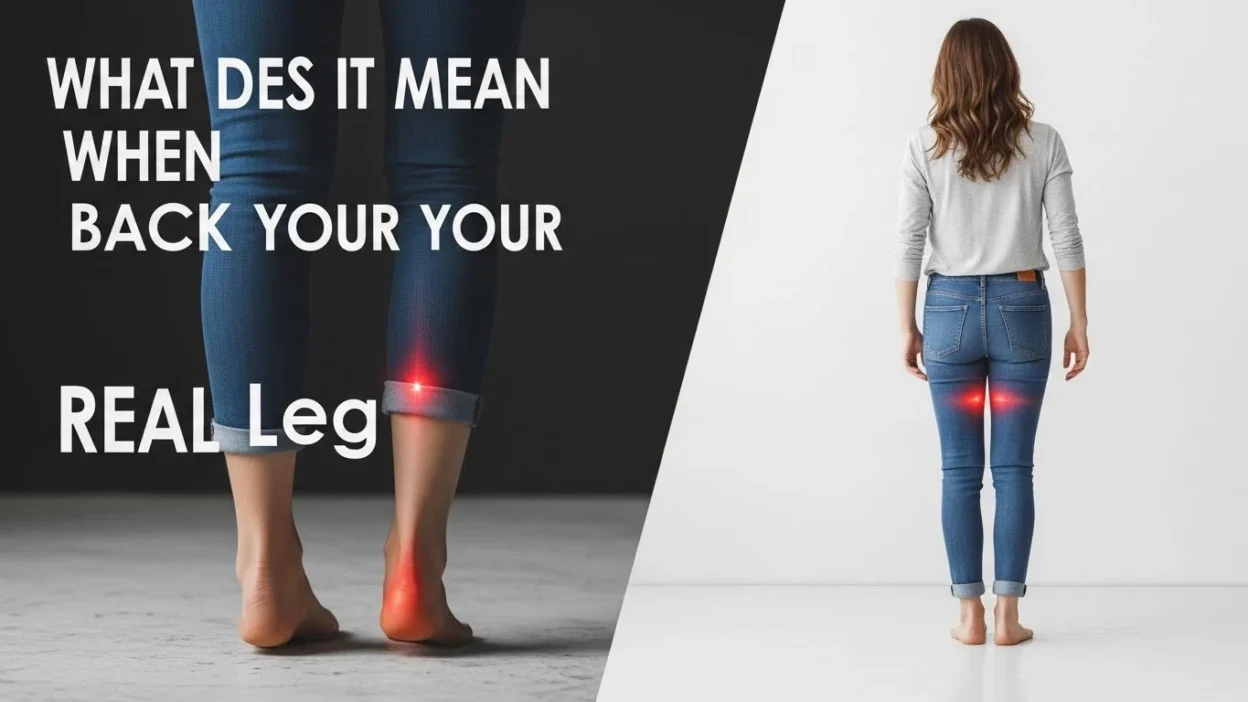
What Does It Mean When the Back of Your Leg Hurts?
Have you ever felt a strange tingling, numbness, or pain at the back of your leg and wondered what it really means?
You’re not alone. Many people experience this, but the causes can range from something minor like muscle strain to issues that need immediate attention.
In this article, I’ll break down all the possible reasons, symptoms, and what you can do to feel better — step by step. By the end, you’ll know exactly what your body is trying to tell you.
Table of Contents
- Common Reasons Behind Back of Leg Pain
- Muscle Strain vs Nerve Issues: How to Tell
- Blood Circulation & Leg Health
- Comparison Table: Causes, Symptoms, & Solutions
- Similar Terms and Slang You Might Hear
- Quick Tips to Relieve Leg Pain
- FAQs
- Conclusion
Common Reasons Behind Back of Leg Pain
Your leg is a complex network of muscles, nerves, and blood vessels. Pain or tingling at the back can happen due to:
- Muscle strain or overuse – Often after exercise or long standing periods.
- Sciatica – Compression of the sciatic nerve causing shooting pain.
- Poor circulation – Can lead to numbness, heaviness, or swelling.
- Deep vein thrombosis (DVT) – Blood clots in deep veins can be serious.
- Injuries – Sprains, hamstring tears, or direct trauma.
Pro Tip: Keep track of when and where the pain occurs. This helps identify the cause faster.
Muscle Strain vs Nerve Issues: How to Tell
It’s crucial to differentiate between muscle and nerve causes:
| Symptom | Muscle Strain | Nerve Issue (e.g., Sciatica) |
|---|---|---|
| Type of Pain | Dull, sore, aching | Sharp, shooting, burning |
| Tingling or Numbness | Rare | Common |
| Pain Triggered By | Movement, exercise | Sitting, bending, standing |
| Relief Method | Rest, massage, stretching | Physical therapy, nerve treatment |
Quick Meaning Box: If pain radiates from your lower back to your leg, it’s likely nerve-related.
Blood Circulation & Leg Health
Poor blood flow can cause discomfort at the back of your leg. Common signs include:
- Swelling or heaviness
- Cold or discolored skin
- Numbness or tingling
- Pain after standing long
Mini Story Example: I once ignored mild tingling in my calf, thinking it was just fatigue. Later, it turned out to be early circulation issues — caught in time thanks to noticing patterns!
Similar Terms and Slang You Might Hear
Sometimes people describe leg pain with casual or slang phrases:
- “Pins and needles” – Tingling sensation
- “Charley horse” – Sudden cramp
- “Nerve zap” – Shooting nerve pain
- “Leg fall asleep” – Temporary numbness
These are often harmless, but persistent pain should never be ignored.
Quick Tips to Relieve Leg Pain
- Stretch your hamstrings gently
- Elevate your leg to improve circulation
- Stay hydrated and active
- Massage the area with light pressure
- Apply ice or heat depending on discomfort
- Consult a doctor if pain persists beyond a week
FAQs
Q1: Why does my leg tingle at night?
A: Tingling at night is often due to poor circulation or pressure on nerves while sleeping. Adjust your posture and consider stretching before bed.
Q2: Can dehydration cause leg pain?
A: Yes! Low fluids can lead to cramps and muscle fatigue.
Q3: When should I see a doctor?
A: If pain is sudden, severe, or accompanied by swelling, redness, or warmth, seek medical attention immediately.
Q4: Is this normal after exercise?
A: Mild soreness is normal, but sharp or persistent pain indicates a deeper issue.
Q5: Can sitting too long affect my leg?
A: Definitely. Prolonged sitting can compress nerves and reduce circulation. Take breaks to move and stretch.
Comparison Table
| Context | Example Phrase | Why It Works |
| Friend Chat | “idk what it means when behind my knee hurts 😭” | Casual + relatable |
| Fitness Chat | “pain behind my knee during runs — normal?” | Clear + sporty |
| Work Chat | “my knee’s fine but behind it hurts today.” | Casual but appropriate |
| Talking to Doctor | “I have pain in the popliteal area when bending.” | Specific + medically useful |
| Online Forum | “What does pain behind the knee usually mean?” | Informative + concise |
🔄 Similar Questions or Alternatives
| Phrase / Question | Meaning | When to Use |
| “Why does the back of my knee hurt?” | General knee discomfort | Everyday conversation |
| “Pain behind knee when walking?” | Motion-related pain | Fitness questions |
| “Tightness behind knee meaning?” | Muscle or tendon tightness | Stretching/workout chats |
| “Why does my hamstring feel tight near the knee?” | Muscle strain focus | Gym or sports groups |
| “What causes pressure behind the knee?” | Cyst or swelling concern | Medical forums |
| “Back of knee pain bending leg?” | Movement-related pain | Quick symptom checks |
Conclusion
Pain or tingling at the back of your leg can signal many things — from simple muscle fatigue to nerve or circulation issues. By understanding the causes, symptoms, and quick relief tips, you can take action before it becomes serious. Always listen to your body, track patterns, and seek medical advice when needed.
Discover More Article
- What Does Survival of the Fittest Mean? For 2026
- What Does OC Mean in Slang? For 2026
- What Does Bomboclaat Mean in Jamaican? 🇯🇲 2026