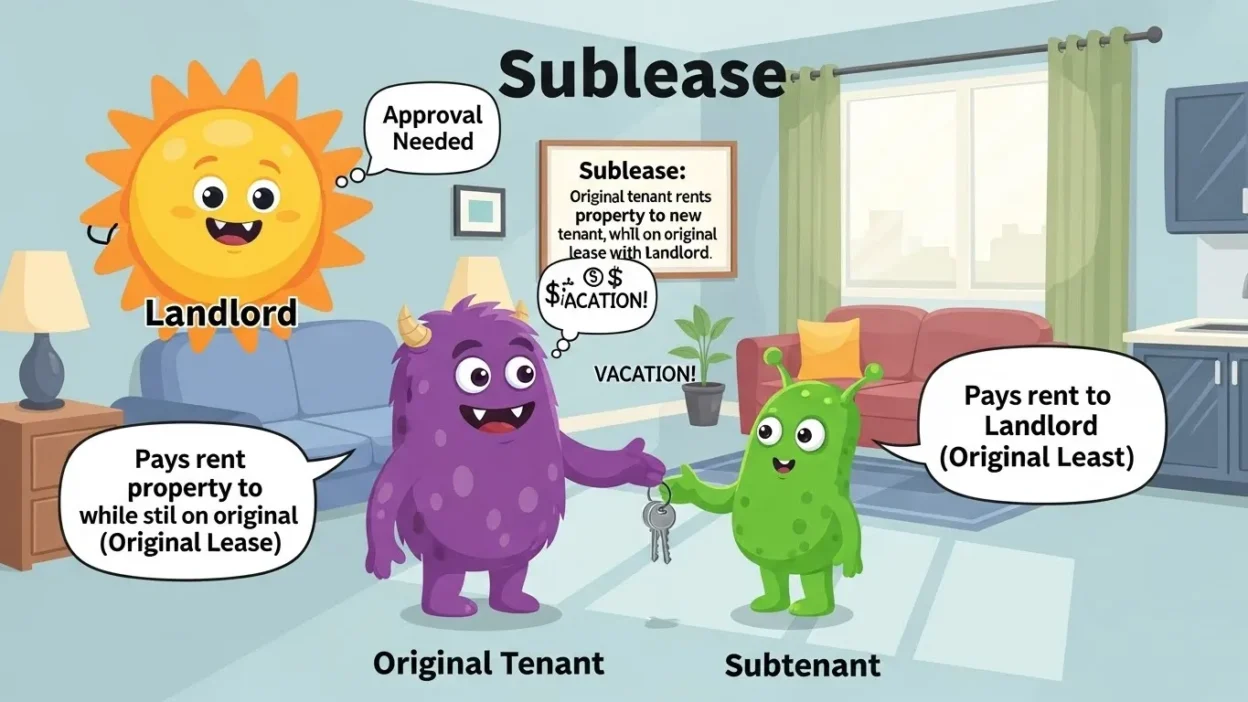
Ever needed to move out before your lease ends but didn’t want to keep paying rent? That’s where a sublease comes in. If you’re wondering what is a sublease, you’re in the right place. In simple terms, it’s when you rent your place to someone else while still being responsible for the original lease.
In 2026, subleasing is more popular than ever due to flexible lifestyles, remote work, and short-term living needs. Whether you’re a tenant trying to save money or someone looking for a temporary place, understanding subleasing can help you avoid costly mistakes.
What Is a Sublease? (Quick Meaning Box)
👉 Quick Meaning:
A sublease is when a tenant rents out their rented property to another person (called a subtenant), while the original tenant still holds the lease with the landlord.
How Does a Sublease Work?
Here’s a simple breakdown:
- You sign a lease with a landlord
- You decide to move out early or temporarily
- You find someone else to live in your place
- That person pays rent to you (or sometimes directly to the landlord)
- You remain legally responsible for the lease
👉 Even if the subtenant doesn’t pay, you still owe rent to the landlord.
Sublease vs Lease vs Sublet (Comparison Table)
| Feature | Lease | Sublease | Sublet |
|---|---|---|---|
| Agreement With | Landlord | Original tenant | Landlord or tenant |
| Responsibility | Tenant | Original tenant | Depends on agreement |
| Duration | Full lease term | Partial or remaining term | Short-term or temporary |
| Legal Control | Landlord | Original tenant | Shared or flexible |
| Risk Level | Low | Medium | Medium |
Why Do People Use Subleases?
Subleasing is growing fast in 2026. Here’s why:
- 📦 Moving to another city temporarily
- 💼 Job relocation or remote work
- 🎓 Students leaving during holidays
- 💸 Avoiding lease-breaking penalties
- 🏠 Testing a new area before committing
Real-Life Example (Easy to Understand)
Let’s say you rented an apartment for 1 year.
After 6 months, you get a job in another city.
Instead of paying rent for an empty apartment, you:
- Find someone to live there
- They pay rent to you
- You still handle the lease
👉 That’s a sublease in action.
Pros and Cons of a Sublease
✅ Advantages
- Save money on unused rent
- Flexible living arrangements
- Helps avoid lease-breaking fees
- Great for short-term renters
❌ Disadvantages
- You’re still legally responsible
- Risk of unreliable subtenant
- Landlord may not allow it
- Possible legal issues if not documented
Is Subleasing Legal?
👉 Yes, but it depends on your lease agreement.
Before subleasing, always:
- Check your lease contract
- Get landlord permission (if required)
- Create a written sublease agreement
💡 Pro Tip: Never sublease without written approval. It can lead to eviction.
Key Things to Include in a Sublease Agreement
Make sure your agreement includes:
- Rent amount and due date
- Duration of sublease
- Security deposit terms
- House rules
- Responsibilities (utilities, damages, etc.)
Sublease vs Roommate – What’s the Difference?
| Feature | Sublease | Roommate |
|---|---|---|
| Lease Holder | One person | Shared |
| Payment Flow | Subtenant → Tenant | Each pays landlord |
| Legal Risk | Higher for tenant | Shared responsibility |
| Flexibility | More flexible | Less flexible |
Similar Terms or Alternatives (People Often Confuse)
| Term | Meaning |
|---|---|
| Sublet | Often used interchangeably with sublease |
| Assignment | Transfers lease completely to another person |
| Lease Transfer | Full legal shift of lease responsibility |
| Room Sharing | Living together while both are on lease |
| Short-term Rent | Temporary rental without long commitment |
Common Mistakes to Avoid
🚫 Not checking lease rules
🚫 Choosing unreliable subtenants
🚫 No written agreement
🚫 Ignoring legal responsibilities
👉 These mistakes can cost you money and legal trouble.
FAQs (People Also Ask)
1. What is a sublease in simple words?
A sublease is when you rent your rented home to someone else while still being responsible for the lease.
2. Is subleasing a good idea?
Yes, if done correctly. It helps save money and offers flexibility, but comes with risks.
3. Who pays rent in a sublease?
The subtenant usually pays the original tenant, who then pays the landlord.
4. Can a landlord رفض (refuse) a sublease?
Yes, if the lease agreement does not allow it.
5. What happens if a subtenant doesn’t pay?
You are still responsible for paying rent to the landlord.
Conclusion
Now you know exactly what sublease means and how to use it confidently in conversations, texts, or social media. It’s a simple, casual term that becomes super practical once you understand it. Next time someone mentions subleasing their apartment, you’ll know exactly what they mean and maybe even use it yourself!